THE KEY IDEA
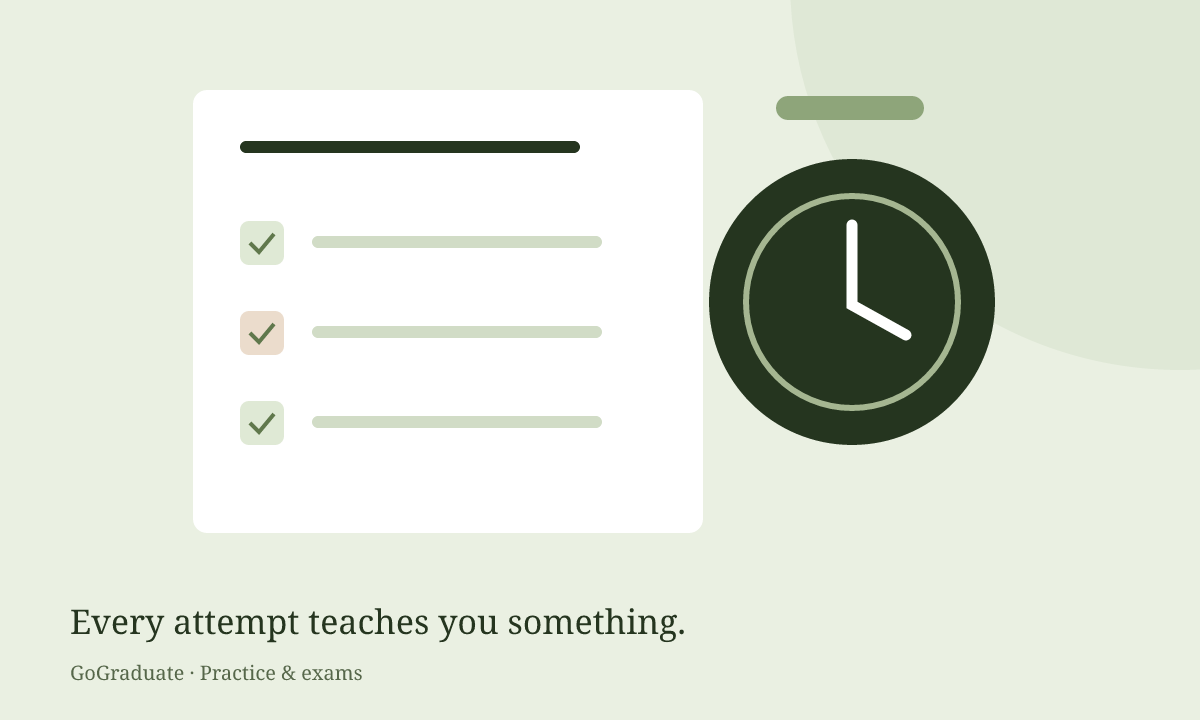
Practise under clear conditions and leave time to review: the mock score is only part of the result.
1. Decide what you are rehearsing
Check the format, duration and marking criteria you know about the real exam. Decide whether to rehearse a full paper or a single section. If you mix topics, record where the questions come from so you can review coverage afterwards.
A sample paper helps you understand question styles and the expected level of detail. It cannot reveal what will appear. Include syllabus content the sample did not test, rather than narrowing your preparation to one small selection.
Prepare the allowed materials beforehand. For a closed-book exam, attempt the mock without your notes. For an open-book assessment, practise locating and using information efficiently as well.
2. Separate the attempt from the feedback
Set a start and finish time. Read the questions and make a rough time allocation, considering their marks when you know them. Leave an opportunity to check your answers.
When you get stuck, record the uncertainty and decide whether to continue or move on. If you use a hint or look up a solution, note it. You can then distinguish a guided answer from an independent one.
Immediate feedback is useful in guided practice. In a mock exam, waiting until the end helps you observe time management and how you maintain an answer without instant confirmation.
3. Identify the mistake before repeating the task
“I got this wrong” does not tell you what to study. Identify a possible cause and write down a concrete action:
- Content: an idea was missing. Review the section and explain it without looking.
- Question reading: you answered something else. Identify what was asked and rewrite the response.
- Approach: you knew the material but chose the wrong step. Compare two approaches and explain which one fits.
- Justification: the conclusion was plausible but unsupported. Connect the evidence to the conclusion.
- Time: you did not finish. Rehearse a shorter section and observe where the time goes.
One answer can involve several causes. You do not need a perfect classification; you need a sensible next task.
4. Try a different question later
After reviewing, attempt a variation or another question on the same concept in a later session. Copying a solution you have just seen shows that you can reproduce it, but not necessarily that you would choose it independently.
Keep a short record of the question, the mistake and the change you want to try. Compare attempts under similar conditions: using notes for one attempt but not the other changes what you can conclude.
A low score guides revision; a high one does not guarantee the real result. Question selection, marking criteria and exam conditions may differ.
Prepare and review a mock exam in GoGraduate
Inside your study space, open Practice and mock exams. Choose the documents to use, including a sample paper if you have one, and specify the pages or exercises you want to focus on.
Select mock exam mode and adjust the format and number of questions. After answering, review the feedback and the content that needs more work. Return to the Tutor to ask about a step, share your reasoning or prepare another practice.
Automated feedback can be wrong. Check important points against your materials and your teacher’s criteria, especially when several answers may be acceptable. The aim is to understand the feedback, not accept a score without reviewing it.